

Morocco’s Mediterranean coast offers a very different beach experience to the country’s Atlantic side. The water is usually warmer and more sheltered, with long family resort beaches, small rocky coves under cliffs and local town strands that come alive on summer evenings. Between Tangier, Tetouan, Al Hoceima, Nador and Saïdia you can put together anything from a budget weekend to a full resort holiday, often combining sea days with mountain villages and medina visits inland.
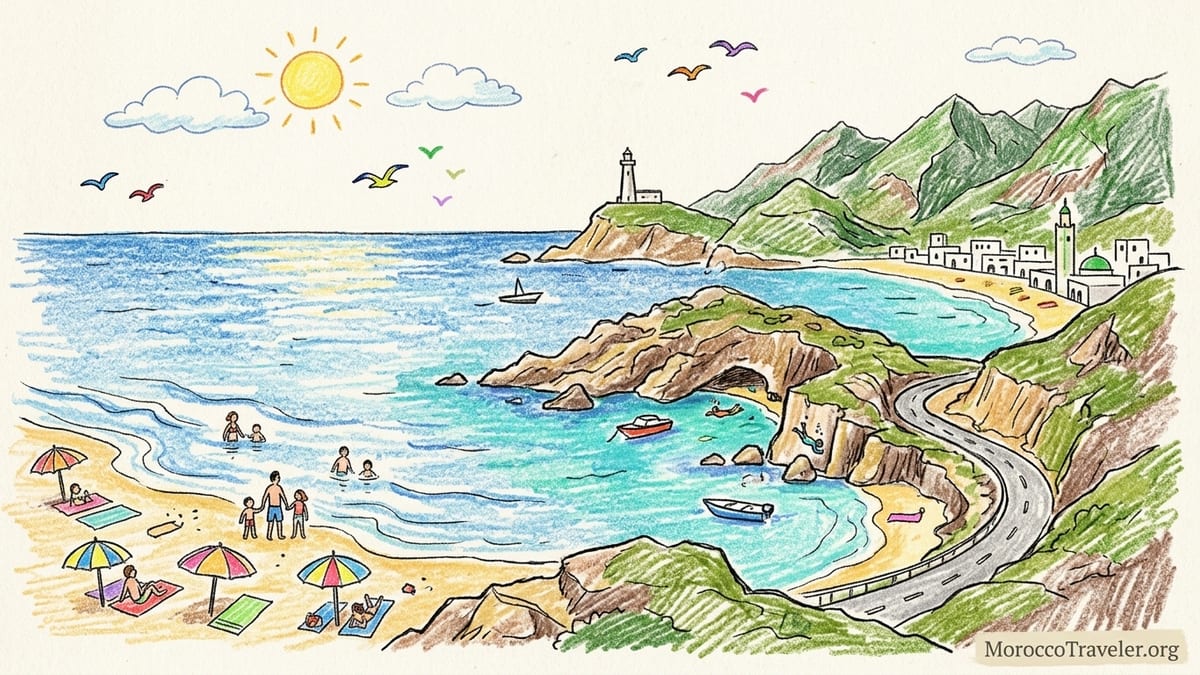
Understanding Morocco’s Mediterranean Shoreline
The northern coast of Morocco curves from the Strait of Gibraltar to the Algerian border, with the main swimmable stretch running east from Tangier through the Tangier–Tetouan–Al Hoceima region, then on past Nador to Saïdia. Tamuda Bay near Tetouan groups Martil, M’diq, Cabo Negro and Marina Smir along about 35 kilometres of coastline, mixing urban promenades, modern apartment complexes and resort zones. Further east, Oued Laou fronts the Rif Mountains, while around Al Hoceima the shoreline breaks into high cliffs sheltering coves like Quemado, Cala Bonita and Sfiha. Near the Algerian border, Saïdia is a classic Mediterranean resort town with one long arc of beach and a purpose-built resort district inland of the sand.
Compared with Morocco’s Atlantic, which is more exposed to ocean swells that attract surfers to places such as Taghazout and Essaouira, the Mediterranean is generally more protected. That can mean gentler waves in summer, clearer water and a longer season for comfortable swimming, roughly late May to September depending on the year. It does not mean that the sea is always calm or safe. Wind, currents and occasional jellyfish blooms are all possible, particularly around headlands or days after storms, so local flags and lifeguard instructions still matter.
Travellers will also notice different types of beaches even along this single coast. Around Saïdia and parts of Tamuda Bay, beaches are broad and sandy with shallow slopes that suit families. Around Al Hoceima, coves may be pebbly underfoot with steep drop-offs but outstanding water clarity. Urban strands such as Martil’s main beach or the town beach at Nador feel more social and busy, especially in August when Moroccans on holiday and visitors from Europe fill the seafront cafés late into the night.
Access is another key contrast. Almost all beach areas in Morocco are officially public, but large resorts sometimes control immediate access to “concessioned” zones of sand in front of the hotel, including sunbeds and umbrellas reserved for guests. Elsewhere, you may park on a dusty roadside, walk down rough paths or descend concrete steps from a clifftop promenade. Understanding which areas are family friendly, where you can rent a sunbed or find a shaded café, and which stretches feel more remote will help you choose the right part of the coast for your trip.
Mediterranean vs Atlantic: Swimming, Weather and Safety
In practical terms, swimming in the Mediterranean differs from Morocco’s Atlantic coast in three main ways: swell, temperature and season. The Mediterranean is semi-enclosed, so it usually avoids the big Atlantic swells that regularly create strong surf at Agadir or Sidi Ifni. On many summer days, especially in Tamuda Bay and Saïdia, waves are low and gently lapping, which helps children or less confident swimmers. However, when strong winds blow along the coast or storms pass, choppy conditions and currents can still appear, particularly near rocks or harbour entrances.
Sea temperatures on the Mediterranean side tend to be a few degrees warmer at the height of summer compared with Atlantic towns at similar latitudes. For example, swimmers in late July often describe Saïdia and M’diq as comfortably warm while Atlantic spots the same week can feel brisk. The shoulder months tell a similar story: by late May and into October, braver swimmers may still enjoy the Mediterranean while Atlantic beaches may already be too chilly for long dips. Exact temperatures vary year by year, so it is wise to check conditions shortly before travel.
Weather also shapes the experience on land. The Mediterranean coast is typically hot and dry in July and August, with crowded promenades at sunset and late-night cafés. Sea breezes offer some relief, but daytime beach hours often run earlier in the morning and then again from late afternoon. In contrast, Atlantic towns often feel cooler and windier, which can be more comfortable for active travelers but less ideal for long, still afternoons on a sun lounger. Packing sun protection is essential in both regions, but on sheltered Mediterranean coves there may be less natural shade, so renting umbrellas or bringing a beach tent is useful.
Whatever coast you choose, basic safety rules remain the same. Look for official lifeguard posts, usually present at popular beaches during the main season. Pay attention to coloured flags and local signs about currents or temporary pollution issues. Do not assume that clear turquoise water always means good water quality or safe swimming, especially near river mouths or harbour areas. In recent years, the Moroccan authorities have expanded their monitoring network and now publish regular information about bathing water quality. Travellers who are used to Atlantic surf towns may find the calmer Mediterranean inviting, but strong swimmers should still be cautious of venturing far offshore without understanding local conditions.
Water Quality, Beach Types and How to Check Conditions
Water quality along Morocco’s coasts has generally improved in recent years, with national reports indicating that the majority of monitored stations meet bathing standards. The Ministry of Energy Transition and Sustainable Development now tracks almost 200 beaches with around 500 sampling points and publishes annual results, along with an official app that shows scores for individual spots. These reports highlight both high-performing beaches and those that fall below standards in certain years because of nearby wastewater outlets, river plumes or harbour activities.
Importantly for Mediterranean travellers, some scenic coves have occasionally been rated as non-compliant for part of a season, even when the water looks crystal clear. Recent coverage of the 2024 monitoring report noted that Calabonita (Cala Bonita) and Kimado (Quemado) in the Al Hoceima area, along with several other beaches, appeared on a list of sites that did not meet microbiological criteria during the sampling period. That does not mean these beaches are always unsafe, but it is a reminder that visual impressions can be misleading. Before planning a swim-heavy day in one of the smaller coves, it is sensible to check the latest official data using the ministry’s bathing water website or app and to watch for any red-flag notices on the ground.
You will encounter four broad beach types along this coastline. Long sandy resort strands include Saïdia’s main beach and much of Tamuda Bay, where the shore is wide, the sand is fine and the slope into the sea is gentle. These areas usually have the best facilities, from lifeguards in season to organised sunbed rental, cafés and family-oriented activities. Small rocky or pebbly coves such as Cala Iris, parts of Sfiha and some corners of Quemado offer striking landscapes and often very clear water, but they can be less comfortable underfoot and drop off deeper more quickly.
Urban town beaches form the third type. Martil, M’diq and Nador all have central beaches backed directly by a seafront promenade or roadway, lined with apartment buildings, restaurants and snack stands. These areas are convenient for travellers without cars and give a strong sense of local summer life, with families picnicking, teenagers playing beach football and ice cream vendors weaving through the crowds. Finally, there are remote or semi-wild stretches such as parts of the coast between Al Hoceima and Cala Iris, and sections east of Oued Laou, where you may find smaller villages, basic cafés and fewer built-up services. These can feel wonderfully quiet outside of peak Moroccan holiday weeks but require more planning for shade, water and toilets.
Checking conditions goes beyond water quality. Many beaches change atmosphere drastically between a weekday in June and the peak of August when Moroccans living in Europe return. Parking that is easy in early July can become congested by mid-August, with informal attendants guiding cars into every available gap. Early starts or evening swims help avoid the tightest crush. Wind, jellyfish and local events can all affect the day’s experience, so speaking with hotel staff, apartment hosts or café owners that morning is often the most efficient way to decide whether to choose a protected cove, a town beach or a broad resort stretch.
Tamuda Bay: Martil, M’diq, Cabo Negro, Marina Smir and Oued Laou
Tamuda Bay is the most practical Mediterranean base for many visitors because it sits within reach of both Tangier and Tetouan and has a cluster of neighbouring beaches with different personalities. Martil is the most urban and local, with a long town beach running parallel to a palm-lined promenade. In summer, residents from Tetouan treat it as an extended living room, with cafés and ice cream parlours spilling out onto the pavement. The sand is generally fine, the slope is moderate and there are sections with seasonal lifeguards, sunbed rentals and pedal-boats, especially near the busiest central area.
Just west along the bay, M’diq combines a working fishing harbour with a polished marina front. It draws both Moroccan families and visitors from the wider Middle East, and its seafront feels cleaner and more upmarket than Martil while still being accessible. The main beach is sandy and relatively broad, and behind it you will find a choice of mid-range hotels and apartment complexes that allow you to walk straight to the promenade. Travellers often highlight the abundance of fish restaurants, from simple grilled sardine stands to sit-down spots that serve mixed seafood plates overlooking the harbour.
Cabo Negro and Marina Smir form the resort core of Tamuda Bay. Cabo Negro is known for its golf course, gated developments and a long sandy beach that many visitors cite as having some of the clearest water and finest sand in the area. The northern part includes private villa areas with restricted vehicular access, but the shoreline itself remains public; you may need to walk from designated car parks or through specific access points. Marina Smir, slightly further along, centres on a yacht marina flanked by whitewashed apartment blocks and resort hotels. Both areas offer beach clubs, organised sunbed and umbrella rental and a feel that is closer to a European-style Mediterranean resort.
Oued Laou, an hour or so east from Tetouan along the coastal road, shifts the mood again. The town beach is backed by low-rise buildings and cafés, with a river mouth at one end and the Rif Mountains rising steeply behind. The sand is mixed with small pebbles in places, and the water can feel slightly cooler because of the river influence, but on calmer days it offers relaxed swimming and a more laid-back atmosphere than Tamuda Bay’s core in high season. Accommodation here is mostly simple hotels and furnished apartments, which keeps costs lower. Travellers without cars can sometimes find seasonal buses or shared taxis from Tetouan, making Oued Laou one of the more reachable quieter escapes along this section of coast.
Al Hoceima and the Coves: Quemado, Cala Bonita, Sfiha and Cala Iris
East of Tamuda Bay, the coast grows wilder as the road winds through the Rif Mountains toward Al Hoceima. The town itself sits on cliffs above a series of coves and small bays, with some of the most dramatic coastal scenery in northern Morocco. Quemado Beach lies directly below the clifftop Hotel Mohammed V and a modern seafront road, reachable by stairs and ramps. The sand is light and the bay forms a natural curve, often with clear turquoise water against the limestone cliffs. Facilities include seasonal lifeguards, sunbed and umbrella rental, beach cafés and easy access back up to town for restaurants and accommodation. However, as noted earlier, this area has occasionally appeared in official reports as having episodes of non-compliant bathing water, so checking the current status before spending long days in the water is prudent.
Cala Bonita, a short drive from central Al Hoceima, has become known for its Instagram-friendly combination of blue water and rugged rocks. The beach itself is a narrow strip, with a mix of sand and pebbles and steeper entry into the sea. A beach restaurant and small facilities cluster above the cove, and in peak season local visitors arrive by car or hired boat. Because of its smaller size, Cala Bonita can feel crowded quickly. It is better suited to adults or confident swimmers than toddlers, particularly on days when the swell is up and waves rebound off the rocks.
Sfiha, just east of Al Hoceima, offers a different layout. It is a longer, open bay with a sandy shoreline and views across to a small rocky island offshore. The beach is adjacent to a holiday complex and an archaeological site linked to historic trade routes. This is one place where the resort influence is felt: sections of the beach in front of hotels operate as concessioned areas for guests, with roped-off sunbed zones and organised activities, while other stretches remain freely accessible to the public. Facilities here are good, with parking, seasonal lifeguards, cafés and toilets, making it a popular choice for Moroccan families.
Further along the coast, Cala Iris sits within the Al Hoceima National Park and represents the classic small Mediterranean cove: pebbly underfoot, enclosed by hills and usually offering very clear water when conditions are calm. Basic cafés, fishermen’s houses and simple guest accommodation dot the surroundings, and many travellers come for the scenery as much as the swimming. Access is more involved than in town beaches: you follow narrow roads through the hills, and public transport is limited. Once there, footwear suitable for pebbles helps, and families with small children may prefer to paddle at the shoreline rather than swim out where the water deepens quickly.
Saïdia and the Eastern Mediterranean Coast
At Morocco’s far northeastern corner, close to the Algerian border, Saïdia is often called the “Blue Pearl” of the Mediterranean. Its key feature is a long, gently curving sandy beach that runs for several kilometres, backed partly by the original town and partly by a large, purpose-built resort area known as Mediterrania Saïdia. The sand here is fine, the slope into the sea is gradual and the water in high summer is among the warmest on Morocco’s northern coast. Families appreciate the shallow entry and the space available for children to play even when the beach is busy.
Saïdia’s accommodation is split between resort complexes and more modest town hotels or apartments. In the resort zone, properties branded as Iberostar, Be Live, Radisson Blu, Oasis Saïdia Palace and similar operate large all-inclusive or half-board formulas, with multiple pools, kids’ clubs and entertainment programmes. Recent information from Moroccan booking platforms shows family-oriented hotels in this area offering summer rates that can start from the equivalent of several thousand dirhams for three-night packages, depending on board basis and room type, while simple town hotels and furnished apartments list nightly rates in the low hundreds of dirhams per room outside the busiest weeks.
Resort beaches in Saïdia remain legally public, but several hotels manage concessioned stretches where sunbeds, umbrellas and non-motorised water sports equipment are restricted to guests, sometimes marked by flags or signs. Visitors staying elsewhere can still access the shoreline by walking along the sand from public access points, though they may not be able to use reserved seating. In the town-centre section of the beach, facilities are simpler: local cafés, ice cream stalls, parasol rentals and seasonal lifeguard stations serve mostly Moroccan families and day trippers. Evening promenades here become an event in themselves, with snack stands and street performers.
East of Saïdia, the coast abuts the Algerian border and there are no further Moroccan resort beaches, while westwards towards Nador the shoreline mixes lagoons and more modest town beaches. Nador’s own urban strand and the nearby lagoon area are popular with local residents, but for visitors focused on swimming and resort-style stays, Saïdia remains the primary destination in this zone. When planning logistics, remember that Saïdia is geographically separated from the main Atlantic itinerary; combining it with desert or imperial city routes often involves a domestic flight or long overland journey.
Facilities, Access and Staying on the Mediterranean Coast
Facilities and access differ considerably between the main Mediterranean beaches, and understanding these differences will help you match your expectations to reality. In Martil and M’diq, the urban layout means that most facilities sit directly behind the beach: cafés, snack bars, simple hotels and apartment rentals. You can often cross one street from your accommodation and be on the sand, which is useful for families who want to return quickly for naps or shade. Parking is generally along streets or in informal paid lots managed by attendants who charge small daily fees.
In Cabo Negro and Marina Smir, access is more structured through resort complexes and gated residences. Many visitors stay in self-catering apartments within walking distance of private or semi-private paths to the shoreline. If you are not staying inside one of these complexes, you may still access public sections of the beach via signed entrances or paths from the main coastal road, but you should be ready for a longer walk and fewer budget snack options immediately on the sand. Beach clubs here may charge for sunbeds and umbrellas per day, and some focus on a younger, music-oriented crowd in high season.
Al Hoceima’s coves mix clifftop town infrastructure with beach-level services. Quemado has good stair and ramp access from the town above, but parking near the seafront can be tight in peak weeks. Basic beach restaurants rent out loungers and umbrellas, and public toilets are available in season. Cala Bonita and Sfiha involve short drives from town; access roads can be narrow, and car parks are often informal gravel spaces. At Cala Iris and some of the more remote coves within the national park, expect more limited facilities: a couple of simple cafés, basic toilet options and possibly no formal sunbed rental. Here, bringing your own umbrella or beach tent and plenty of water is advisable.
On Saïdia’s main beach, the resort zone provides the most comprehensive infrastructure. Guests of the large hotels will find direct access from landscaped grounds to the sand, supervised kids’ pools, organised activities and often dedicated lifeguards for the hotel frontage. Non-guests using public areas share lifeguard coverage managed by local authorities and can rent sunbeds from independent operators. Toilets may be inside beachfront cafés or set up as paid public facilities during the season. For travellers without a rental car, Saïdia and Martil are among the easiest Mediterranean beaches to reach using intercity buses and local taxis, while reaching Cala Iris or some Al Hoceima coves usually requires private transport or arranging transfers with local drivers.
Comparing Key Beaches: Conditions, Crowds and Who They Suit
When choosing where to base yourself, it helps to think systematically about each major beach’s swimming conditions, water clarity, shoreline texture, facilities, crowd levels, accessibility, nearby stays and suitability for children. Broad resort beaches such as Saïdia and much of Cabo Negro typically offer gentle wave action in summer, shallow gradients and fine sand underfoot. Water clarity at these sites can still be good, especially on calm days, but it may appear slightly less transparent close to the shoreline because of the fine sand stirred by bathers. Urban beaches like Martil and M’diq balance swim-friendly conditions with heavier use and occasional river influence that can affect clarity near outlets.
Small coves such as Quemado, Cala Bonita, Sfiha and Cala Iris often impress visitors with their clear, blue-green water set under cliffs or rugged hillsides. The trade-offs are steeper entries, pebbly or mixed sand and rock underfoot and, in some cases, more complex access routes. These coves can be magical for competent swimmers who enjoy snorkelling close to rocks or floating in deeper water, but they are less forgiving for toddlers who want to paddle long distances in knee-deep surf. They also rely more heavily on day-to-day conditions; a shift in wind direction can quickly change a glassy cove into a choppier bay.
Facilities track these differences. Saïdia’s resort zone and Tamuda Bay’s core beaches have the fullest range of services: supervised swimming zones in season, frequent lifeguard posts, official parking, public or café toilets, organised water sports such as pedal boats or jet ski rentals, beach clubs and nearby hotels across a range of budgets. Martil and M’diq’s urban beaches have many cafés and simple services but fewer organised water sports. In Al Hoceima’s coves, you often find at least one beach restaurant, some umbrella rental and seasonal lifeguards at the better-known sites, but remote coves like parts of Cala Iris may lack formal supervision or rental infrastructure.
Accessibility and crowd levels are two final differentiators. Travellers relying on public transport or shared taxis will find Martil, M’diq, Tetouan, Al Hoceima town beaches and Saïdia easiest, since buses and grand taxis run to these centers from larger cities. Cala Bonita, Sfiha and Cala Iris generally require private vehicles or organised transfers, which naturally keeps numbers lower outside Moroccan holiday peaks. In August, almost every beach along this coast becomes busy, but resort zones and urban promenades can feel especially crowded in the evenings, while some coves still allow you to find space if you arrive early.
Overall, families with small children often gravitate towards the long sandy arcs of Saïdia, Cabo Negro and parts of Martil and M’diq, where shallow water, on-duty lifeguards and nearby facilities offer peace of mind. Couples or friends seeking quieter surroundings and striking landscapes tend to prefer Al Hoceima-area coves and Cala Iris, accepting the trade-off of pebbles and longer drives. Budget-conscious travellers might split time between an inland base such as Tetouan or Al Hoceima city and day trips to nearby beaches by taxi, while resort holidaymakers may choose to stay inside an all-inclusive complex in Saïdia or Marina Smir and venture out only occasionally.
Recommendations: Where to Swim, Relax and Stay
For the best overall family beach on Morocco’s Mediterranean coast, Saïdia is a strong contender. Its long, sandy shoreline, gentle entry into the sea and abundant accommodation give parents flexibility. Families can opt for all-inclusive resorts with kids’ clubs and multiple pools or choose town apartments within walking distance of both the beach and everyday amenities like supermarkets and bakeries. The presence of lifeguards during the main season along much of the beach and the relative lack of sudden depth changes in the water make it especially appealing for younger children, though usual vigilance is always required.
Travellers seeking a quiet escape with a real holiday-town feel should look closely at Oued Laou and Cala Iris. Oued Laou’s pebble-sand shore backed by the Rif Mountains remains more low-key than Tamuda Bay’s core; in early July or September it can feel relaxed and uncrowded outside weekends. Simple seafront guesthouses and apartments mean you can walk to the beach with ease, and evenings revolve around small cafés rather than large-scale entertainment. Cala Iris, reached by a winding road, offers a different kind of quiet: the sense of being tucked into a natural amphitheatre, with clear water, fishing skiffs and basic seaside cafés. It suits travellers who value scenery and do not mind trading some comfort underfoot and amenities for that setting.
For the clearest-water experience combined with striking scenery, the Al Hoceima region stands out, particularly Cala Iris and, when conditions are favourable, Quemado and Sfiha. On calm days, the water in these coves can appear almost transparent, with shades of turquoise and deep blue close to the rocks. Snorkellers enjoy exploring near the edges of the bay, although equipment rental options are limited and many bring their own masks. Before committing to long swims, it is wise to confirm that current bathing water reports classify your chosen cove as compliant for that season, especially given occasional non-compliance noted in recent national monitoring results.
If your goal is a straightforward resort holiday with maximum convenience, Tamuda Bay and Saïdia both provide compelling choices. Around Cabo Negro, Marina Smir and M’diq you will find a range of modern apartments, mid-range hotels and a few higher-end properties, plus relatively short transfers from Tetouan or Tangier. Saïdia, by contrast, concentrates much of its tourism into a dedicated resort zone where large hotels offer all-inclusive packages, extensive pool complexes and direct beach access. In both locations, you can supplement beach days with excursions inland, such as a visit to Tetouan’s medina from Tamuda Bay or to Oujda from Saïdia.
For travellers without a rental car, the easiest Mediterranean beaches to reach and enjoy are Martil, M’diq and Saïdia. Regular buses and shared taxis connect Tetouan with Martil and M’diq, and once there you can walk almost everywhere, from accommodation to the sand to evening cafés. Saïdia is linked to larger inland cities by bus, and once in town, both the central beach and many budget lodgings lie within walking distance of each other. These car-free bases allow visitors to combine sea time with strolls along lively promenades, leaving the harder-to-reach coves to a future trip when private transport or organised tours are available.
FAQ
Q1. When is the best time to swim on Morocco’s Mediterranean coast?
The main swimming season usually runs from late May to September, with July and August bringing the warmest sea temperatures and the biggest crowds.
Q2. Is the Mediterranean side always calmer than the Atlantic in Morocco?
The Mediterranean is generally more sheltered, so waves are often smaller, but wind, currents and storms can still create choppy or unsafe conditions.
Q3. How can I check water quality for specific Moroccan beaches?
The Moroccan environment ministry publishes annual bathing water reports and provides an official app that shows current classifications for monitored beaches.
Q4. Are resort beaches in places like Saïdia and Cabo Negro private?
The shoreline is public, but many resorts manage concessioned areas of sand in front of their properties where sunbeds and umbrellas are reserved for guests.
Q5. Which Mediterranean beach in Morocco is best for families with small children?
Saïdia’s long, sandy beach and the sandy stretches of Tamuda Bay around M’diq and Cabo Negro are popular with families because of gentle slopes and good facilities.
Q6. Do I need a car to visit Cala Iris, Sfiha or Cala Bonita?
Reaching these coves is far easier with a car or private transfer, as public transport is limited and access roads from main towns can be winding and indirect.
Q7. Can I rely on lifeguards along the Mediterranean coast?
Lifeguards are usually present in season at major beaches, but coverage varies by location and date, so you should always assess conditions yourself and supervise children closely.
Q8. Are there good budget options near the Mediterranean beaches?
Yes, towns like Martil, M’diq, Oued Laou, Al Hoceima and Saïdia offer simple hotels and furnished apartments that cost less than resort complexes.
Q9. What should I pack for a beach trip to Al Hoceima’s coves?
Bring sturdy footwear for pebbles or rocks, sun protection, plenty of drinking water and, if you plan to linger, your own shade in case rental umbrellas are limited.
Q10. How does evening life differ between town beaches and resort zones?
Town beaches like Martil and Saïdia’s centre have lively promenades with local families, while resort zones focus more on hotel entertainment and beach clubs for guests.