


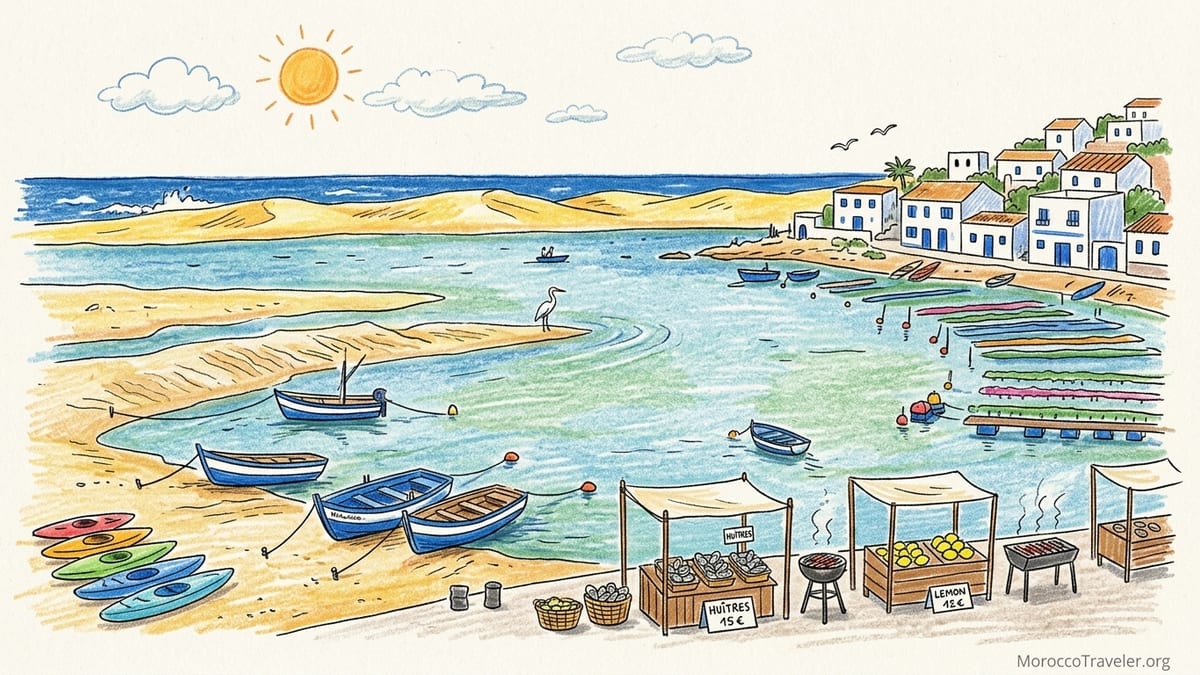
I arrived in Oualidia with a head full of images from Morocco’s Atlantic coast: blown sand, big surf and gritty port towns like Safi and El Jadida. Instead, I stepped out of the car to something that felt almost inland. A glassy lagoon curved away between low cliffs and sandbanks, its surface barely ruffled while, beyond the gap in the dunes, I could hear the distant roar of the open ocean. Fishing boats lay tilted on the sand at low tide, white and blue hulls reflected in the shallows, and a row of simple oyster stalls hugged the edge of the water. It felt like I had stumbled into a pocket of calm carved out of a normally wild coastline.
Getting to Oualidia and My First Glimpse of the Lagoon
I started this trip in Marrakech, trading red walls and traffic for the promise of sea air. I left from the city’s western edge in a hired car just after 8 a.m., taking the highway toward Casablanca before turning off toward El Jadida and Safi. The journey to Oualidia took a little under three and a half hours with one coffee stop, mostly on good quality main roads with clear signage. The last stretch, after passing through rural farmland and small towns, narrowed into a two lane coastal road lined with eucalyptus trees before finally dropping toward the sea.
The first real sign that I had reached Oualidia was a glimpse of pale sand and a sudden widening of the view. The main road skirts slightly inland, so I followed simple blue signs pointing to “Lagune” and “Plage” and wound down toward the waterfront. Parking was informal but straightforward. I found a dirt lot overlooking the water, where an attendant waved me into a space and quoted 10 dirhams for the day, roughly the going rate that other drivers were paying. From there it was a short walk down a sloping lane to the edge of the lagoon.
What struck me immediately was how sheltered everything felt. Instead of a single long beach facing the ocean, the water formed an elongated basin protected by a bar of sand dunes. At low tide, the lagoon opened into channels separated by tawny sandbanks. At high tide, the water rose to lap against stone steps and low walls. Fishing boats and small wooden skiffs lay moored in the shallows, some pulled onto the exposed sand, and beyond the far dunes I could see only the white tips of Atlantic breakers. Compared with open stretches at places like Essaouira or Taghazout, this felt like a protected harbour designed for lingering rather than bracing walks.
The village itself hugged the hillside above the lagoon, a mix of whitewashed houses, a few low rise hotels and everyday shops. It did not look polished, but it did look surprisingly low key for such a famous seafood destination. The soundtrack was gulls, the clink of oyster knives on shells and the hollow thump of wooden oars as boatmen ferried people across the water.
Kayaking, Tides and Finding a Place to Swim
I had chosen Oualidia precisely because it offers lagoon water as an alternative to surf, so I headed first for kayak and paddleboard rentals. On the northern side of the lagoon, near several mid range hotels and guesthouses, a handful of operators had plastic kayaks and stand up paddleboards stacked on the sand. The setup was simple. A staff member noted the start time, handed me a paddle and an optional life jacket and quoted 100 dirhams per hour for a single kayak, which matched the price list I had seen advertised by local hotels and activity centers. Payment was in cash, with the option to negotiate a modest discount for two hours.
I went out mid morning, a couple of hours before high tide. The water was calm, with only a slight current pulling toward the mouth of the lagoon. Close to shore, the bottom was clearly visible: rippled sand under water that shifted from pale green to a deeper, opaque blue in the channels. Small motorboats passed occasionally, but most movement came from other kayakers and children in bright plastic pedal boats near the main beach. It felt almost like paddling on a lake, especially when I turned away from the mouth of the lagoon and followed the curve of the shore past low cliffs and patches of reeds where wading birds picked through the shallows.
Swimming in the lagoon turned out to be easier than I had expected, provided I paid attention to the tide. Locals steered me toward the main sandy curve on the southern side, where umbrellas and plastic loungers had been set up during the day. Here the slope into the water was gentle and the sheltered position meant the surface stayed smooth even when, out beyond the dunes, the ocean was visibly rough. Families waded out together and teenagers jumped from anchored boats at high tide. At low tide, the water retreated and left wide stretches of firm sand, ideal for walking or letting children play without waves.
Facilities were functional but basic. A public toilet block sat behind the beach, with a small fee for access. Showers were limited to simple freshwater hoses attached to beach kiosks. Everything felt more improvised than in larger resorts, so it is worth bringing your own towel, drinking water and a change of clothes. Still, compared to battling big waves and strong currents at more exposed Atlantic beaches, the ease of simply stepping into calm lagoon water was one of Oualidia’s biggest appeals for me.
Boats, Birds and Walking the Edge of the Lagoon
Beyond paddling myself, I wanted to see the broader shape of the lagoon without worrying about currents. Down by the water, several men offered short boat trips in traditional wooden skiffs. The standard proposal was a 30 to 45 minute loop from the village side across to the dunes and back, with optional stops on the sandbanks if the tide allowed. Prices were negotiable but generally started around 150 to 200 dirhams per boat for a small group. I joined a couple of other visitors to share the cost and climbed into a blue and white boat that smelled faintly of salt and diesel.
As we crossed the lagoon, the difference between this setting and Morocco’s open beaches became even clearer. The water inside the lagoon barely rippled, broken only by the wake of other small boats, while through the entrance we could see the Atlantic rolling in, heavy and white. Sandbanks rose and fell with the tide, forming temporary islands dotted with birds. The boatman pointed out egrets and herons standing in the shallows and what he said were migrating waders feeding on exposed mudflats. Even if my bird identification skills were limited, it was obvious that this sheltered water supported a different rhythm of life to the surf battered outer coast.
Back on land, I followed one of the informal paths that run along the cliffs above the northern shore. The walk gave me a wide angle view of the lagoon’s full curve. At certain points I could see, in one sweep, the calm inner basin, a line of oyster farms along the far side and, beyond the protective dune, plumes of spray where the Atlantic hit exposed rocks. In Essaouira or Agadir, the ocean dominates every view; in Oualidia, the lagoon and its sandbanks are the stars and the ocean is a background presence, audible but mostly unseen.
In the late afternoon, when the day trippers began to thin out, this path was also where the quiet of Oualidia really settled in. Apart from a few local teenagers with fishing rods and an occasional jogger, I had the cliffs almost to myself. Down below, the lagoon reflected the soft, peach colored light of the setting sun, and the only clear sign of human activity was the rhythmic movement of oyster workers at the edge of the water.
Eating Oysters at the Water’s Edge
Oualidia calls itself Morocco’s oyster capital and that claim is not just marketing. Oyster farming began here in the mid twentieth century, and today the lagoon supports multiple farms and stalls that send shellfish to restaurants across the country. National media and recent travel guides describe Oualidia and the southern town of Dakhla as the two main hubs of Moroccan oyster production, with Oualidia particularly prized for the quality and flavor of its lagoon raised shellfish. Walking along the waterfront, it was impossible to miss the rows of simple stands where this history is still very much alive.
For my first tasting, I chose one of the basic wooden stalls near the central part of the lagoon, where half a dozen vendors worked side by side behind makeshift counters stacked with oysters, clams and small crabs. There was no printed menu, just shouted prices and a chalkboard noting that a dozen local oysters cost between 70 and 90 dirhams depending on size. Recent reviews and local guides I had checked before the trip mentioned similar figures, and the vendor nodded when I asked to confirm the total. I ordered a dozen medium sized oysters and a small plate of shrimp.
The preparation could not have been simpler. The vendor rinsed the shells in lagoon water, shucked them in front of me and arranged the oysters on a metal tray with lemon wedges. There was no vinegar, no elaborate garnish, just briny, cool flesh that tasted clean and mineral rich, with a deeper salinity than many European oysters I have tried. The shrimp came grilled over a small charcoal brazier, lightly charred and dusted with salt. Eating here was not a long, formal experience. I stood at a high counter, elbows occasionally jostled by other customers, watching the late afternoon sun catch the boats. For about 120 dirhams including a simple tip, I had a meal that would cost several times that in a big city restaurant.
Later, wanting to compare the stall experience with a sit down restaurant, I booked a table at a lagoon side hotel restaurant known locally for its shellfish platters. The dining room looked directly over the water and the menu listed Oualidia oysters by numbered size, echoing what I had seen in a printed menu where half a dozen mid sized oysters were priced around 100 dirhams. Here, presentation mattered more. Oysters arrived on crushed ice with lemon and a light shallot dressing, followed by grilled sea bass and a mixed seafood platter. The service was polished, and the atmosphere suited a slower, more comfortable dinner, but I found myself missing the immediacy of the market stalls where the lagoon and the farm workers are in constant view.
Where I Stayed and Whether a Lagoon View Is Worth It
For this trip, I split my time between a simple guesthouse in the village and a night closer to the water. My first night was in a family run riad style guesthouse several streets up from the lagoon. The room was basic but clean, with tiled floors, a hot shower and reliable Wi Fi. Breakfast was served on the rooftop terrace and consisted of fresh bread, msemen pancakes, jam, cheese and coffee. From here it took about ten minutes on foot to reach the water. The advantage was price and a sense of being in the everyday village rather than a dedicated resort zone. In the evening I could walk to small local cafes and watch football matches on television with residents, something that is hard to do in more insulated seaside enclaves.
The second night, I moved to a boutique property on the northern side of the lagoon with direct access to the water. The room rate, as expected, was significantly higher than inland options but lower than the most prestigious address in town, La Sultana Oualidia. La Sultana operates as a high end, twelve room property with suites that look either toward the lagoon or over lush gardens. Published material and brochures indicate that entry level Panorama Rooms there can start from roughly 4,600 dirhams per night in low season, while lagoon facing suites and the treehouse style accommodations command much higher prices. The hotel is frequently cited in luxury travel catalogues as one of Morocco’s standout coastal stays, and most of its rooms and suites are designed explicitly around lagoon views.
Staying in a lagoon view room, even if not at that top tier, did change my Oualidia experience. In the early morning, before day trippers arrived, I could step directly out to a small terrace and watch mist lifting off the water. The only sounds were birds and the occasional putt putt of a fishing boat crossing to the oyster farms. In the evening, after the last cars had left the public parking areas, the lagoon side path outside the hotel grew quiet. I could still walk safely along the water, but the daytime bustle of vendors and families had faded. That transition from busy midday destination to tranquil, almost private feeling waterfront was where paying more for proximity and a direct view felt justified.
Whether a full luxury resort like La Sultana is worth its price depends on your priorities. If you value spa facilities, curated activities and complete seclusion, you will find services there that a simple guesthouse cannot match, including private access to the lagoon, tailored boat trips and on site fine dining that makes strong use of local oysters. However, during my stay in Oualidia, I found that simply being within a short walk of the water gave me most of the benefits I wanted: quiet mornings, easy access for kayaking and the ability to slip down to the oyster stalls without planning a full excursion. For many travelers, a mid range lagoon side guesthouse may offer the best balance between immersion and cost.
Day Trip Reality, Crowds and Honest Limitations
I met several visitors who had come to Oualidia as a day trip from Marrakech or Casablanca, arriving late morning and leaving just before sunset. After spending two nights, I understood the appeal of this approach and its limitations. For a single day, you can comfortably fit in a boat ride, a swim and an oyster tasting, which are the core highlights. You can park near the lagoon, rent a kayak for an hour, then reward yourself with seafood before driving back. For travelers on a tight schedule or those unsure about dedicating more than a day to a small town, this is a reasonable plan.
However, Oualidia’s calm is most evident outside the middle of the day. Between about 11 a.m. and 4 p.m., especially on weekends and Moroccan holidays, the main lagoon edge can feel crowded. Cars fill informal parking lots, vendors call out to passing families, and plastic chairs and umbrellas multiply on the sand. It never reached the density of high season Agadir during my visit, but the atmosphere during these hours was busy and slightly chaotic rather than tranquil. If you come only as a day trip, this is likely the Oualidia you will see, with brief glimpses of peace at the edges of your schedule.
The town also has a limited range of activities compared with larger resorts. Aside from water based options like kayaking, stand up paddleboarding and beginner friendly surfing at the mouth of the lagoon or nearby beach breaks, there are not many formal attractions. There is no large medina to wander as in Essaouira, and nightlife is minimal, with evenings focused on dinner, hotel bars and quiet walks. If you are looking for a busy social scene, shopping or varied museums, Oualidia may feel too small after more than a couple of days.
There were also minor disappointments. On one afternoon, strong winds picked up, chopping the lagoon’s surface into short waves that made paddleboarding less appealing. Another time, I arrived at my preferred oyster stall to find they had already sold out of the size I enjoyed most, a reminder that this is a working seafood spot, not a theme park. Some parts of the village back from the lagoon showed visible wear, and certain beachfront structures felt haphazard. None of this outweighed the overall charm for me, but it is worth arriving with realistic expectations of a modest, authentic coastal town rather than a perfectly manicured resort strip.
One Day Plan, Overnight Alternative and Who Oualidia Suits
If you only have one day to spare, I would suggest arriving in Oualidia by 10 a.m. Start with a walk along the lagoon from one end of the main waterfront to the other to get a sense of the setting and tide level. Then rent a kayak or arrange a short boat trip before midday, when the water is at its most inviting and the light is gentle for photos. Aim for an early seafood lunch at one of the oyster stalls or a simple lagoon side restaurant around 1 p.m., budgeting roughly 80 to 120 dirhams for a dozen oysters and extra for grilled fish or shrimp. After lunch, spend an hour or two swimming or resting on the sand, then finish with a late afternoon stroll along the northern cliff path for broad views before driving back.
For an overnight visit, my ideal timing would be to arrive mid afternoon, settle into accommodation and spend the first evening simply walking the lagoon as the day trip crowds depart. Have a relaxed seafood dinner, then wake early the next morning to enjoy the lagoon at its quietest, perhaps joining an early boat trip to the sandbanks and bird rich shallows. After breakfast, choose between a second outing on the water or a few unhurried hours on the beach before leaving after lunch. This pattern makes the most of the softer light and calmer atmosphere that, in my experience, truly define Oualidia.
As for who should make the trip, Oualidia feels particularly well suited to a few types of travelers. Food lovers who care about origin stories will appreciate tasting oysters within sight of the farms that raised them. Families with younger children will value the safety of shallow, mostly wave free swimming areas compared with the pounding surf of many Atlantic beaches. Couples looking for a quiet break between bigger cities will find the early mornings and evenings around the lagoon especially romantic, with softly lit water and relatively few people around. Active travelers can combine beginner friendly surf, kayaking and stand up paddleboarding with walks along the cliffs, but hardcore adventure seekers might run out of challenges quickly.
On the other hand, if your idea of a beach holiday is wide open bars, late night music and a long list of organized excursions, Oualidia may not deliver. It is better approached as a place to slow down and focus on a small set of pleasures: calm water, fresh seafood and the daily shift of tide across a beautiful, human scale lagoon. For me, that combination made Oualidia feel very different from Morocco’s more exposed Atlantic beaches and well worth the detour.
The Takeaway
My time in Oualidia felt like discovering a gentler face of Morocco’s Atlantic coast. Instead of wind blasted promenades and big hotel blocks fronting heavy surf, I found a protected lagoon whose moods are dictated as much by tide and oyster work as by tourism. Arriving by road from Marrakech, stepping out of the car to see a mirror smooth stretch of water framed by dunes and boats, was a genuine surprise that reset my expectations for what a Moroccan beach town could be.
Kayaking and swimming in the lagoon confirmed that this is an ideal place for travelers who might be wary of strong waves but still want to be close to the ocean. Eating oysters at simple waterfront stalls connected me directly to a long standing local tradition and offered remarkable value compared with big city seafood restaurants. Splitting my stay between a village guesthouse and a lagoon side boutique hotel helped me understand how much difference a water view and easy access make to the overall experience, even if ultra luxury options are not necessary for everyone.
Oualidia is not perfect. It can feel busy in the middle of the day, and its limited set of activities will not suit every traveler. Yet its combination of quiet mornings, calm water and serious dedication to oysters make it stand out among Morocco’s Atlantic destinations. If you are willing to trade nightlife and long promenades for sandbanks, bird calls and the sound of oars on still water, Oualidia’s lagoon offers a quietly memorable escape.
FAQ
Q1. Is Oualidia better as a day trip or an overnight stay?
In my experience, Oualidia works for both, but an overnight stay lets you enjoy the lagoon in its quietest moments early in the morning and after day trippers leave. A day trip is enough to taste oysters, take a short boat ride and have a swim, while a night in a lagoon side guesthouse or hotel adds more calm and atmosphere.
Q2. How much should I expect to pay for oysters in Oualidia?
At simple stalls by the lagoon, I saw and paid prices in the range of roughly 70 to 100 dirhams for a dozen local oysters depending on size and season. Hotel restaurants and higher end dining rooms charge more, but even then the cost per oyster is generally lower than in major European or North American cities for similar quality.
Q3. Are the lagoon waters safe for swimming?
During my visit, the main bathing areas along the southern curve of the lagoon offered shallow, calm water that felt safer and more manageable than open Atlantic surf. As always, conditions can change with tides and weather, so it is wise to follow local advice, avoid strong currents near the mouth of the lagoon and keep a close eye on children.
Q4. Can I rent kayaks and paddleboards easily in Oualidia?
Yes. I found several small operators and hotels along the lagoon renting kayaks and stand up paddleboards by the hour, with prices around 100 dirhams including basic equipment. The process was informal: choose a craft, agree on a time period, leave a name or phone number and pay in cash.
Q5. How does Oualidia compare with Essaouira or Agadir?
Oualidia is much smaller and quieter than Essaouira or Agadir, with a focus on its protected lagoon rather than long open ocean beaches. You will not find a large historic medina or extensive nightlife, but you will find calm water, sandbanks, birdlife and an unusually strong oyster culture that sets it apart from those larger coastal cities.
Q6. Is a lagoon view hotel worth the higher cost?
For me, being able to step out directly onto the lagoon edge at sunrise and after sunset justified paying more for a room near the water. If your budget allows, a mid range or boutique lagoon side stay offers quieter mornings and easier access to swimming and kayaking, without needing to go all the way to the most expensive luxury properties.
Q7. What is the best time of year to visit Oualidia?
My visit fell outside the peak summer months, when Moroccan families often fill coastal towns. Spring and early autumn tend to offer pleasant temperatures and fewer crowds, while July and August bring more visitors and a busier atmosphere along the lagoon, especially on weekends.
Q8. Are there vegetarian or non seafood options in Oualidia?
Seafood dominates menus near the lagoon, but most restaurants and guesthouses can prepare simple vegetarian dishes such as vegetable tagines, salads, omelettes and grilled vegetables. Inland in the village you will also find everyday eateries serving Moroccan basics that do not rely on fish or shellfish.
Q9. Do I need a car to enjoy Oualidia?
Having a car made my trip easier, especially for arriving from Marrakech and carrying luggage, but once in Oualidia I did most things on foot. Taxis can handle short local journeys, and if you are staying near the lagoon you can reach the oyster stalls, boatmen and main beach without driving.
Q10. Is Oualidia suitable for families with young children?
Yes, Oualidia’s sheltered lagoon, shallow swimming areas and generally relaxed pace make it a good option for families. During my time there I saw many local and visiting families with small children enjoying the water and sandbanks. Parents should still remain vigilant around the water and near the mouth of the lagoon where currents are stronger.