


Choosing Morocco for a first trip is easy. Deciding where in Morocco to base yourself is much harder. The country’s main destinations offer very different experiences, from atmospheric medinas and ocean promenades to surf beaches and all inclusive resorts. This guide compares Marrakech, Fez, Rabat, Casablanca, Tangier, Essaouira, Agadir and Chefchaouen so you can match your holiday style with the right city, rather than guessing from a map or chasing the latest social media trend.
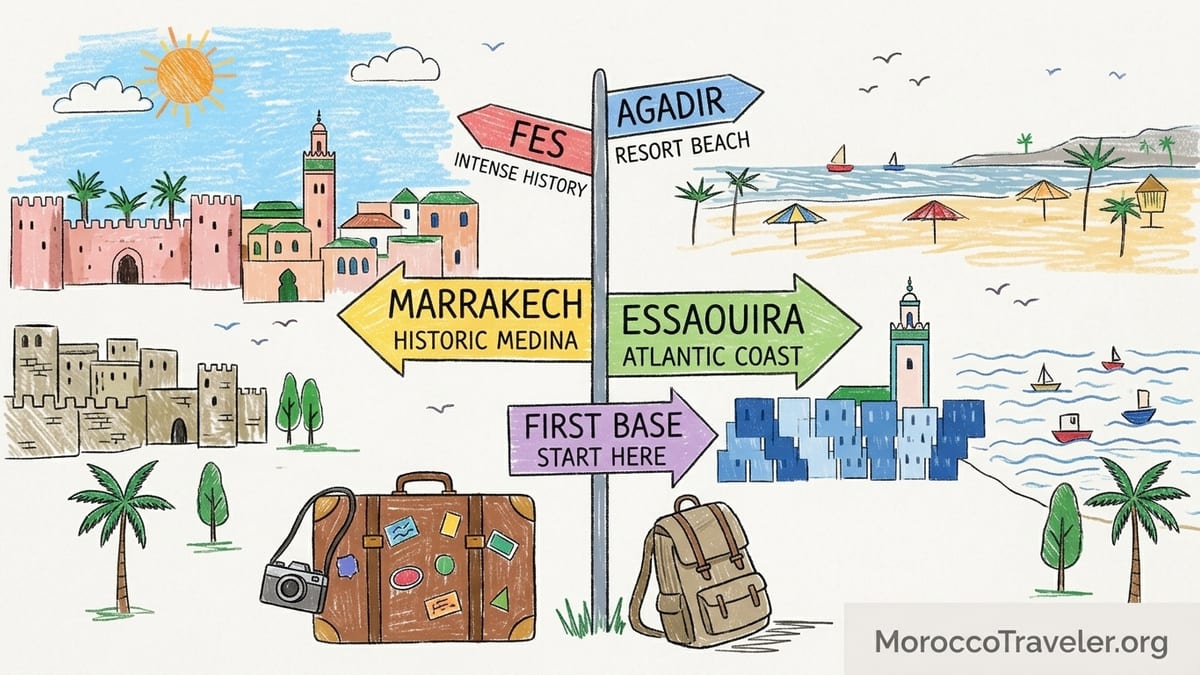
How to Choose Your First Moroccan Base
On a first visit, most travelers do not need to see every famous city. Trying to squeeze Marrakech, Fez, Chefchaouen, the Sahara and the Atlantic coast into a single short trip often means too much time in transit and not enough time actually enjoying Morocco. A better approach is to choose one or two bases that fit your travel style and then build simple day trips around them.
In practice, that means being honest about what you want. If you crave riads, souks and historic mosques, cities such as Marrakech and Fez deliver dense layers of history within walkable old towns. If you picture sunset drinks on a seafront promenade and cooler evenings, Rabat, Tangier and Essaouira can work better. If your priority is an easy, good value resort holiday with predictable comfort, Agadir often makes more sense than pushing deep into the medinas.
Flight access is another key factor. Marrakech and Casablanca usually have the widest choice of non stop international flights, followed by Tangier and Agadir, then Rabat and Fez. From Europe, seasonal low cost routes change frequently, so it is worth checking both the nearest logical airport and Casablanca, which often has competitive long haul fares and frequent domestic connections on Moroccan airlines.
Finally, consider your confidence level. Navigating inside car free medinas involves frequent approaches from touts offering guiding, shopping or directions. In places like Fez el Bali and central Marrakech, this can feel intense for first timers. Quieter districts in Rabat, Casablanca’s more modern neighborhoods, or the seafront quarters of Tangier and Essaouira give an easier introduction to Morocco while still feeling distinctly North African.
Marrakech: High Impact, High Reward
Marrakech is the city most first time visitors picture when they think of Morocco. Its walled medina, palm groves and pinkish ramparts create a memorable backdrop, and its tourism infrastructure is the most developed in the country. There are hundreds of riads inside the medina, from simple family run guesthouses to polished boutique properties featured by major travel magazines. Well known examples include midrange riads near Dar el Bacha or Bab Doukkala and high end properties such as El Fenn, a boutique hotel spread across multiple interconnected riads with rooftop pools and views of the Koutoubia Mosque.
Culturally, Marrakech offers enormous variety within a compact area. The main square of Jemaa el Fna, the Koutoubia Mosque exterior, Bahia Palace, the Saadian Tombs and the maze of souks can all be reached on foot from many central riads. Newer attractions, like contemporary art galleries in the medina and gardens in the Ville Nouvelle, broaden the experience beyond classic sightseeing. This density of experiences is why many travelers can comfortably spend three or four nights here without running out of things to do.
The trade off is intensity. The medina’s alleys are busy, scooters and handcarts weave through crowds, and visitors frequently report persistent offers of guiding or shopping. Online discussions by recent travelers describe experiences that range from exhilarating to overwhelming for solo visitors, especially at night. The contrast between the frenetic streets and the calm inside a riad courtyard is part of Marrakech’s charm, but it also means choosing your accommodation and arrival strategy with care. Paying your riad to arrange airport pickup and a short guided walk from the nearest gate can make arrival significantly smoother.
For first timers, areas like Dar el Bacha and Bab Doukkala inside the medina, or the Hivernage and Gueliz districts just outside the old walls, usually strike a good balance between atmosphere and ease. Couples often choose romantic riads with plunge pools and rooftop terraces, while families sometimes prefer modern hotels with larger rooms and straightforward taxi access. Older travelers who value quieter evenings might find that staying just outside the noisiest alleys still allows easy access to the main sights without being immersed in the square’s late night energy.
Fez: Intense History and a Challenging Medina
Fez is Morocco’s spiritual and intellectual heart, with a medieval core that UNESCO describes as one of the most extensive and best conserved historic towns in the Arab Muslim world. Its old city, Fes el Bali, is a dense warren of car free lanes, madrassas, caravanserais and traditional houses. Architecturally, it rivals or surpasses Marrakech in interest, and many traditional homes have been converted into characterful riads and guesthouses that open onto tiled courtyards and rooftop terraces overlooking the city.
For culture focused travelers, Fez can be unforgettable. The Bou Inania and Al Attarine madrassas, the tanneries, centuries old fondouks and a variety of neighborhood mosques and shrines create days of detailed exploration. However, several recent academic studies and traveler reports point out that tourist pressure is concentrated into a limited number of walking routes inside the medina, which can heighten both commercial hustle and visitor fatigue. Some solo travelers, particularly women, describe feeling uncomfortable when arriving late or getting lost in back alleys, while others report warm hospitality and no problems at all. The difference often comes down to expectations, time of day and choice of riad location.
In practical terms, navigating Fez’s medina requires more confidence than most other Moroccan cities. Taxis cannot enter Fes el Bali, so you usually walk from one of several main gates to your riad. With luggage, heat and occasional unsolicited “help” from unofficial guides, this short walk can feel stressful if you are unprepared. Local advice often stresses asking your riad in advance which gate to use and whether they can arrange a porter or staff escort on arrival. Many organized tours now include guided medina walks precisely to help first timers focus on architecture and history rather than way finding.
If you are unsure, one compromise is to stay just inside the medina near a major gate or to book a hotel on the hillside overlooking the old city, then enter the medina by day for sightseeing. Midrange options in the Ville Nouvelle, such as classic art deco era hotels on main avenues, provide predictable comfort at prices that often fall around the mid hundreds of Moroccan dirhams per night for a double room, according to recent accommodation guides. This setup can suit older visitors, families, or solo travelers who are curious about Fez but prefer to keep their nights quieter and their navigation simpler.
Rabat and Casablanca: Calmer Capital, Major Hub
Rabat, Morocco’s capital, often surprises first time visitors. It combines a compact historic core with embassies, government buildings and a landscaped new town. The city’s medina and Kasbah of the Udayas feel more relaxed than Marrakech or Fez, and the Atlantic setting brings cooler air and a local, lived in atmosphere. Travel writers and destination specialists describe Rabat as walkable, relatively tidy and less aggressive in its tourism economy than the big imperial capitals of the past.
These qualities make Rabat a strong choice for travelers who want a softer landing in Morocco. A three night stay allows time to explore the kasbah, the riverside Bouregreg area, the Hassan Tower and Mohammed V Mausoleum, while still leaving hours for cafe sitting and leisurely walks. Common accommodation choices include small guesthouses in the medina, charming properties inside the kasbah and modern hotels in the Ville Nouvelle or the Agdal neighborhood. For rail based trips, Rabat’s two main train stations connect easily with Casablanca, Fez, Tangier and Marrakech, so basing here can simplify onward travel without the bustle of a larger commercial center.
Casablanca, by contrast, is less about classic sightseeing and more about logistics and business. It is Morocco’s largest city and commercial hub, with the busiest international airport in the country. For many travelers, its main standout attraction is the Hassan II Mosque, one of the world’s largest, which offers guided interior visits at scheduled times. Apart from this and a modest art deco downtown, Casablanca’s appeal as a tourist destination is limited compared with the other cities in this guide.
Where Casablanca excels is as a transport hub. Mohammed V International Airport sees frequent long haul flights and serves as the main base for national carriers, with domestic connections to cities such as Agadir and Ouarzazate, as well as fast rail links to Rabat and the high speed line to Tangier. For an itinerary that spends most of its time elsewhere in Morocco, it can make sense to fly into or out of Casablanca while spending just one night in the city itself. Business travelers, or those who prefer large international style hotels, may appreciate Casablanca’s modern waterfront districts and shopping malls, but culture focused first timers usually find richer experiences in other cities.
Tangier, Essaouira and Agadir: Morocco by the Sea
Tangier sits at the meeting point of the Atlantic and the Mediterranean, a place where ferries from Spain arrive and high speed trains from Casablanca and Rabat terminate. After a major waterfront and marina redevelopment, recent visitors describe a noticeably cleaner seafront and upgraded public spaces compared with a decade ago. The city’s whitewashed medina climbs above the harbor, while the new town stretches along a sandy bay with a broad promenade. This mix of historic core and modern infrastructure, together with direct flights from several European cities, makes Tangier a convenient choice for travelers who want a coastal base without sacrificing transport connections.
Essaouira, several hours by road from Marrakech, is smaller and more atmospheric. Its walled medina looks over the Atlantic, and trade winds keep temperatures milder than inland. The town has become popular with independent travelers, kite surfers and creative visitors who enjoy slower days wandering the blue and white alleys, visiting small galleries and eating fresh grilled fish at the harbor. Accommodation skews toward midrange guesthouses and riads, with some higher end boutique hotels just outside the old walls. Unlike Agadir, Essaouira’s beach is more about walking and watersports than calm swimming, because of the waves and wind.
Agadir is very different from both. Rebuilt after a devastating earthquake in 1960, it is a planned beach city with a long crescent of sand, large resort hotels and a palm lined seafront promenade. Many European visitors come here on package deals that combine flights and all inclusive stays. Recent family travel reports highlight large beachfront properties, including well known resort brands and Moroccan chains, with kids’ clubs, multiple pools and direct access to the promenade. Prices vary with season, but packaged winter sun deals from Europe can undercut the cost of booking flights and riads separately in Marrakech or Fez for the same travel dates.
For a resort focused first trip, Agadir works well because it minimizes stress. The modern airport lies a drive outside the city, transfers are straightforward, and most daily needs are contained within or immediately around the hotels. Excursions to nearby surf beaches or to the more characterful port town of Essaouira can add variety, but you can also simply stay put. Families with younger children, travelers recovering from long haul flights, and visitors who prioritize sea views and sun loungers over historic sightseeing may all find that Agadir delivers exactly what they need, while more exploratory travelers might prefer to limit it to a few nights at the start or end of a wider itinerary.
Chefchaouen: Photogenic but Logistically Out of the Way
Chefchaouen, the famous “blue city” in the Rif Mountains, has become one of Morocco’s most shared images online. Its lanes, staircases and doorways are often painted in shades of blue, creating photogenic scenes that appeal strongly to visual travelers. The old town is compact, and many guesthouses offer rooftop terraces looking out over the hills. Days there tend to revolve around leisurely walks, photography, simple hikes to viewpoints and cafe time on the main square.
What online images rarely show is the logistical effort involved in reaching Chefchaouen. There is no commercial airport or rail station, so most visitors travel by road from cities such as Tangier, Tetouan or Fez. Journey times can range from roughly two to four hours one way depending on the starting point, road conditions and stops. This makes Chefchaouen a better fit for itineraries of at least seven to ten nights, when you can comfortably spend two or three nights there without squeezing the rest of your route.
For first time visitors with limited days, Chefchaouen can also feel less representative of Morocco as a whole than cities like Marrakech, Fez or Rabat. Its economy is heavily tourism driven, and the blue paint that makes it so distinctive is constantly refreshed to meet visitors’ expectations. That does not make the town inauthentic, but it does mean that daily life here looks different from larger, more mixed economy cities. Couples and photographers often love the slower pace and mountain setting, while families with small children or travelers sensitive to winding roads sometimes decide that reaching Chefchaouen is not the best use of a short trip.
Accommodation in Chefchaouen tends to consist of small guesthouses in converted traditional homes and modest hotels near the medina. A growing number of properties now cater to midrange and boutique expectations, with comfortable rooms and styled terraces. Prices reported on booking platforms and travel blogs suggest that Chefchaouen can offer especially good value in the shoulder seasons, as long as you factor the additional cost of private transfers or bus tickets into your overall budget.
Comparing Morocco’s Main First Timer Bases
To help you match destinations to your needs, the following comparison table outlines typical first stay lengths, suggested hotel neighborhoods, airport access and genuine drawbacks for each of the eight cities covered. Details such as hotel examples and prices are based on current guidebooks, hotel collections and recent traveler reports, but always check directly with properties and airlines, as availability and rates change frequently.
| City | Ideal First Stay | Recommended Areas to Stay | Airport Access | Genuine Drawbacks for First Timers |
Marrakech | 3 to 4 nights | Inside the medina around Dar el Bacha or Bab Doukkala for calmer lanes, or Hivernage and Gueliz for modern hotels | International airport close to town with many European routes | Crowded medina, frequent touts, traffic and scooter noise inside the walls can feel intense, especially at night |
Fez | 2 to 3 nights | Edge of Fes el Bali near main gates, hillside hotels with medina views, or central Ville Nouvelle | Smaller international airport with some European links, plus domestic flights | Steep alleys, no car access in the medina, persistent offers of help and complex navigation demand more confidence |
Rabat | 2 to 3 nights | Medina and Kasbah for character, Ville Nouvelle and Agdal for comfort and rail access | Rabat Salé airport with a limited but growing list of routes, plus fast trains from Casablanca airport | Less “wow” factor than Marrakech or Fez, more administrative in feel, smaller selection of character riads |
Casablanca | 1 to 2 nights | City center near the Hassan II Mosque or business districts near the waterfront | Best connected airport in Morocco with many long haul and regional flights | Limited sightseeing beyond the main mosque and modest art deco core, heavy traffic and construction in some areas |
Tangier | 2 to 3 nights | Medina overlooking the harbor, or new town along the beach promenade | International airport with European flights, plus high speed trains from Rabat and Casablanca | Steep streets in the medina, port area can feel hectic around ferry arrivals, beach more urban than resort like |
Essaouira | 2 to 3 nights | Medina inside the sea walls or riads just outside the gates | Small airport with seasonal flights; otherwise road transfers from Marrakech or Agadir | Strong winds and cooler temperatures make the beach less suitable for calm swimming, limited big hotel choice for large families |
Agadir | 3 to 5 nights | Beachfront resort strip and areas directly behind the promenade | Airport a drive from town but well served by package charters and some scheduled flights | City lacks historic medina atmosphere, can feel generic compared with older cities, surroundings are more spread out |
Chefchaouen | 2 to 3 nights | Compact medina and hillside guesthouses with views | No airport or rail, reached by road from Tangier, Tetouan or Fez | Longer transfer times, winding mountain roads, smaller range of high end hotels, heavily tourism focused economy |
Alongside these structural points, cost patterns matter. As of late 2026, recent hotel roundups show that budget double rooms in simple riads or guesthouses in cities like Marrakech, Fez and Chefchaouen can often be found from the lower hundreds of dirhams per night outside peak periods. Midrange riads with air conditioning and stylish decor frequently occupy the mid hundreds of dirhams, while top tier boutique riads and historic hotels in prime locations command substantially higher nightly rates. Beach resorts in Agadir and some Tangier properties sometimes work out cheaper per person when booked as part of a package that includes flights and meals, particularly for families.
Who Should Stay Where: Matching Destinations to Traveler Types
Couples often gravitate toward Marrakech, Essaouira and Chefchaouen for their combination of atmospheric streets and intimate riad style accommodation. A classic first trip pairing might be three or four nights in a romantic medina riad in Marrakech, with a rooftop plunge pool and curated decor, followed by two or three slower nights in Essaouira in a sea facing guesthouse. Another couple friendly combination is Fez and Chefchaouen, especially for those who enjoy deep dives into history and photography, with the caveat that both medinas can feel busy and navigating them requires some comfort with getting a little lost.
Families with younger children typically find Agadir and Marrakech easiest. Agadir’s large resorts offer kids’ clubs, pools and direct beach access, with activities and buffets that allow parents to relax. Marrakech, meanwhile, works for families who want culture as well as comfort, particularly if they stay in the wider streets of Hivernage or in spacious riads that can arrange child friendly guides and early dinners. Day trips from Marrakech to calmer spots such as the Atlas foothills or waterparks can break up time in the medina.
Solo travelers face different choices. Confident solo visitors who enjoy urban energy often do well in Marrakech or Tangier, where there is enough activity and variety to fill days and evenings but also modern cafes and co working style spaces. Those who feel anxious about harassment or getting lost may appreciate Rabat’s calmer street life, or a base in the Ville Nouvelle of Fez with guided excursions into the medina. Online accounts from solo travelers in Morocco frequently emphasize the value of arranging daylight arrivals, booking riads that offer clear directions or pick up, and considering small group walking tours for the first day in each city.
Older travelers and those with limited mobility might prioritize smoother access and quieter evenings. Rabat and Casablanca, with their broader pavements, taxis and trams, require far less climbing than Fez’s medina. In Marrakech, staying in ground floor rooms in riads with fewer stairs, or choosing single level hotels in Gueliz or Hivernage, can make a big difference. Culture focused travelers who want the richest range of monuments in a manageable setting might find that alternating a more intense city like Fez or Marrakech with a softer landing spot such as Rabat or Essaouira gives the right rhythm for a first trip of a week or more.
Smart First Trip Combinations for 4, 7 and 10 Nights
For a four night break, it rarely makes sense to base in more than one city. If you want a high impact introduction to Morocco, four nights in Marrakech allows three full days to explore the medina, visit key monuments, take a guided food walk and spend an afternoon in the newer districts. For a calmer feel, four nights in Rabat with a day trip by train to Casablanca for the Hassan II Mosque offers a lower stress alternative. Beach focused travelers could choose four nights in Agadir, with perhaps a single organized day excursion if desired.
With seven nights, you can comfortably include two bases without overscheduling yourself. One popular pattern is Marrakech for four nights and Essaouira for three, linked by a road transfer of a few hours. This suits couples and culture loving travelers who want variety without domestic flights. Another option is Rabat for three nights and Fez for four, connected by train, which balances a relatively gentle capital city with a deeper, more concentrated historic environment. For those flying into Casablanca, spending the arrival night near the airport or in the city, then traveling by train to Rabat or Marrakech the next morning, can help mitigate long haul fatigue.
With ten nights, there is room to see more of Morocco without turning your holiday into a checklist. A balanced first timer route might combine Marrakech, a coastal city and either Fez or Chefchaouen. For instance, you could spend four nights in Marrakech, three in Essaouira and three in Chefchaouen, connecting the latter via flights and trains through Casablanca and Tangier, or by overland travel from Fez. Another ten night pattern would be Rabat, Fez and Tangier, all linked by rail, which suits travelers who prefer public transport over private transfers and want to minimize domestic flights.
In all these cases, the key is to group destinations that share logical transport corridors. Casablanca, Rabat, Tangier and Fez sit along main rail lines, which simplifies movement. Marrakech links well with Essaouira and Agadir by road and with Casablanca by rail. Chefchaouen remains the outlier, connected primarily by bus or private transfer from Tangier, Tetouan or Fez, which is why it sits more comfortably in slightly longer trips. By thinking of Morocco as a set of connected corridors rather than isolated dots, you avoid losing half days repeatedly backtracking through the same hubs.
Destination Selection Flowchart and Airport Advice
If you are still unsure where to start, imagine a very simple decision flow. First, decide whether you want your first Moroccan base to feel primarily like a historic city, a coastal town or a resort. If “historic city” is your priority, ask whether you are comfortable with intense, maze like medinas. If yes, Marrakech and Fez deserve top billing, with Marrakech usually edging ahead for its combination of variety and infrastructure. If you prefer a more measured pace, Rabat offers a historic core without the same level of street hustle.
If “coastal town” feels closer to your ideal, decide how important a swimmable beach is. If you want a long sand beach with resort hotels and predictable comfort, Agadir is designed for exactly that, with Tangier as a secondary option that blends urban spaces and a bayfront promenade. If you are more interested in ambiance, sea walls and wind swept walks, Essaouira is the stronger choice, with the added benefit of pairing very naturally with Marrakech on a first trip.
If you are drawn to photogenic mountain towns and slower rhythms, ask how much transit time you are willing to accept for Chefchaouen. If you only have four to six nights, it may be wise to save it for a later trip and focus on cities that match well with your arrival airport. For longer holidays of a week or more, especially when flying into Tangier or arriving by ferry from Spain, Chefchaouen can be a highlight, provided you understand that you are trading easy access for a distinct sense of place.
Airport choice often follows from these decisions. For resort focused holidays in Agadir, flying directly into Agadir’s airport or via Casablanca with a domestic connection makes the most sense. For city and culture trips centered on Marrakech and Essaouira, Marrakech Menara Airport is usually the best gateway, with a road transfer or bus link on to Essaouira if needed. For rail based itineraries that combine Rabat, Casablanca, Fez and Tangier, flying into Casablanca’s major international airport and then taking trains onward often gives the best fares and schedules. Travelers whose main aim is Chefchaouen, Tangier and the north can look for flights into Tangier or combine a Casablanca or Rabat arrival with a fast train north before switching to road transport for the final leg.
FAQ
Q1. Is Marrakech or Fez better for a first time visit to Morocco?
Marrakech usually works better for a first trip because it offers a huge variety of sights, dining and accommodation in a compact area with strong flight links, even though the medina can feel intense; Fez has deeper medieval history but its denser, steeper, car free alleys and more concentrated hustle can be challenging if you are not already comfortable with North African cities.
Q2. Which Moroccan city is best if I mainly want a relaxed beach holiday?
Agadir is the strongest choice for a relaxed resort style beach holiday, with a long sandy bay, large all inclusive hotels, family oriented facilities and straightforward airport transfers, while cities like Essaouira and Tangier offer more characterful seafronts but less of an all inclusive resort atmosphere.
Q3. Is Rabat worth visiting on a first trip, or should I focus on Marrakech and Fez?
Rabat is very much worth considering on a first trip if you prefer calmer streets, cooler Atlantic air and easier navigation, even though it lacks some of the high drama of Marrakech and Fez; many travelers find that two or three nights in Rabat provide a gentle introduction to Morocco before tackling a more intense medina.
Q4. How many nights should I spend in Marrakech on my first visit?
For most first time visitors, three or four nights in Marrakech works well, giving at least two full days for the medina and monuments plus time for a food tour, a hammam visit or a short excursion without feeling rushed.
Q5. Is Casablanca a good place to base myself for sightseeing?
Casablanca is excellent as a flight and train hub and for visiting the impressive Hassan II Mosque, but it is not the best base for sightseeing compared with cities like Marrakech, Fez, Rabat or Essaouira, so most visitors limit their stay to one or two nights at the start or end of a trip.
Q6. Which destinations are best for solo travelers concerned about safety and hassle?
Solo travelers who want to minimize hassle often feel most comfortable starting in Rabat, Agadir or the newer districts of Marrakech or Fez, then using guided walking tours to explore the medinas by day, while confident solo visitors may also enjoy the energy of central Marrakech and Tangier.
Q7. What is a good first time combination for one week in Morocco?
A very workable one week combination is four nights in Marrakech and three in Essaouira if you want culture and sea air, or three nights in Rabat followed by four in Fez if you prefer a calmer capital city paired with a deep dive into medieval history reached by train.
Q8. Is Chefchaouen realistic for a short first trip to Morocco?
Chefchaouen is logistically realistic only if you have at least seven to ten nights and are willing to spend several hours traveling by road from cities such as Tangier or Fez, so for shorter trips it usually makes sense to focus on more accessible bases and save the blue town for a later visit.
Q9. Are riads suitable for families with children?
Many riads welcome families and can be wonderful with older children who appreciate the courtyards and rooftops, but for very young children large hotels or resorts in areas like Agadir, Hivernage in Marrakech or the beach districts of Tangier may be easier because they offer lifts, pools, kids’ clubs and simpler access with strollers.
Q10. Which airport should I choose if I want to visit several different regions?
If you plan a multi city trip that includes Marrakech and the Atlantic coast, Marrakech’s airport is usually best, while rail based routes linking Casablanca, Rabat, Fez and Tangier are easiest if you fly into Casablanca; travelers focusing on Agadir’s resorts should look for flights directly to Agadir or connect there via Casablanca, and those centering their trip on northern cities like Tangier and Chefchaouen should consider flying into Tangier when possible.